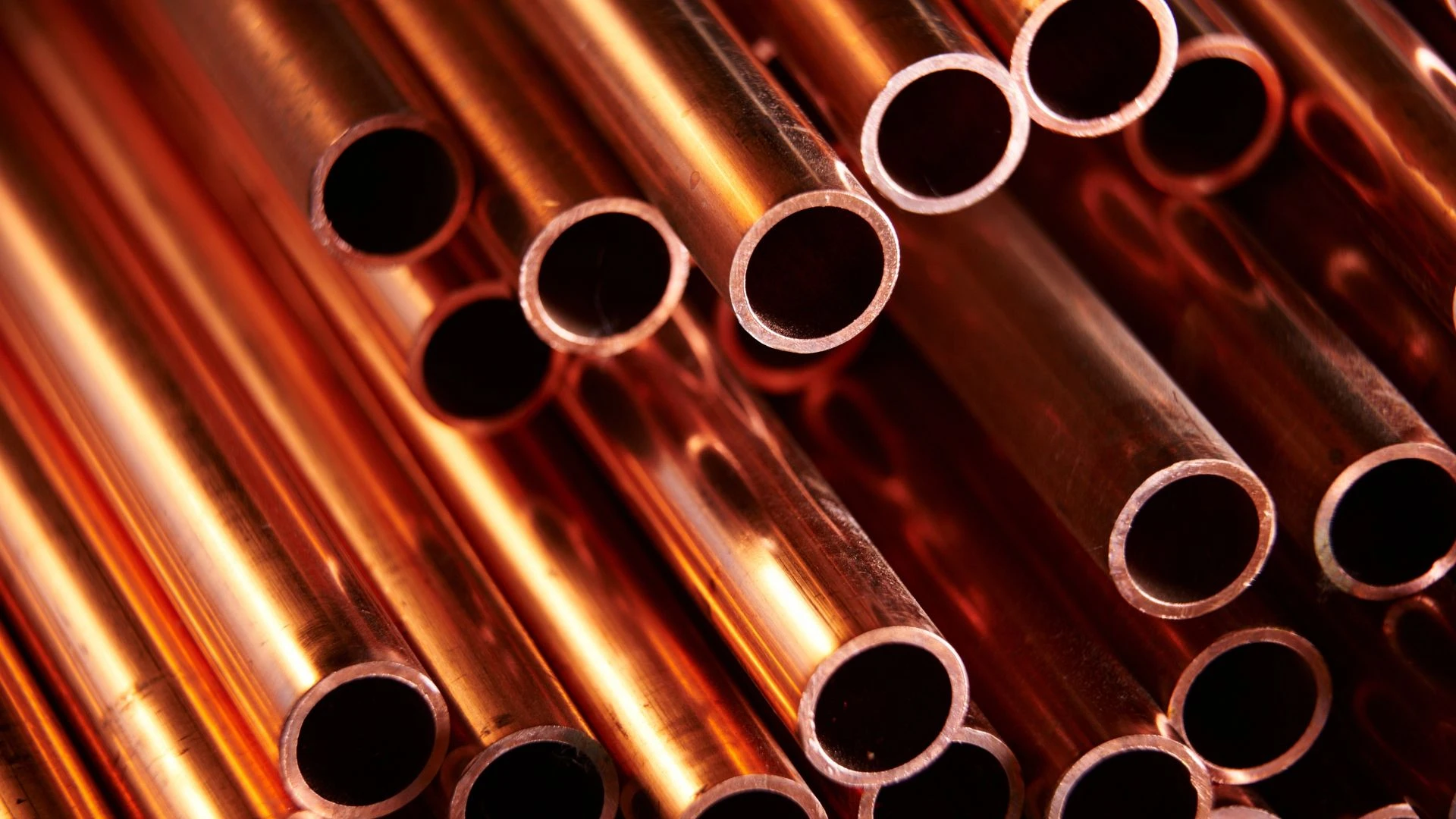
Copper has been the go-to material for plumbing, heating, and air conditioning systems for decades. It is reliable, well-known, and available at any hardware store. For many applications, it remains a valid option.
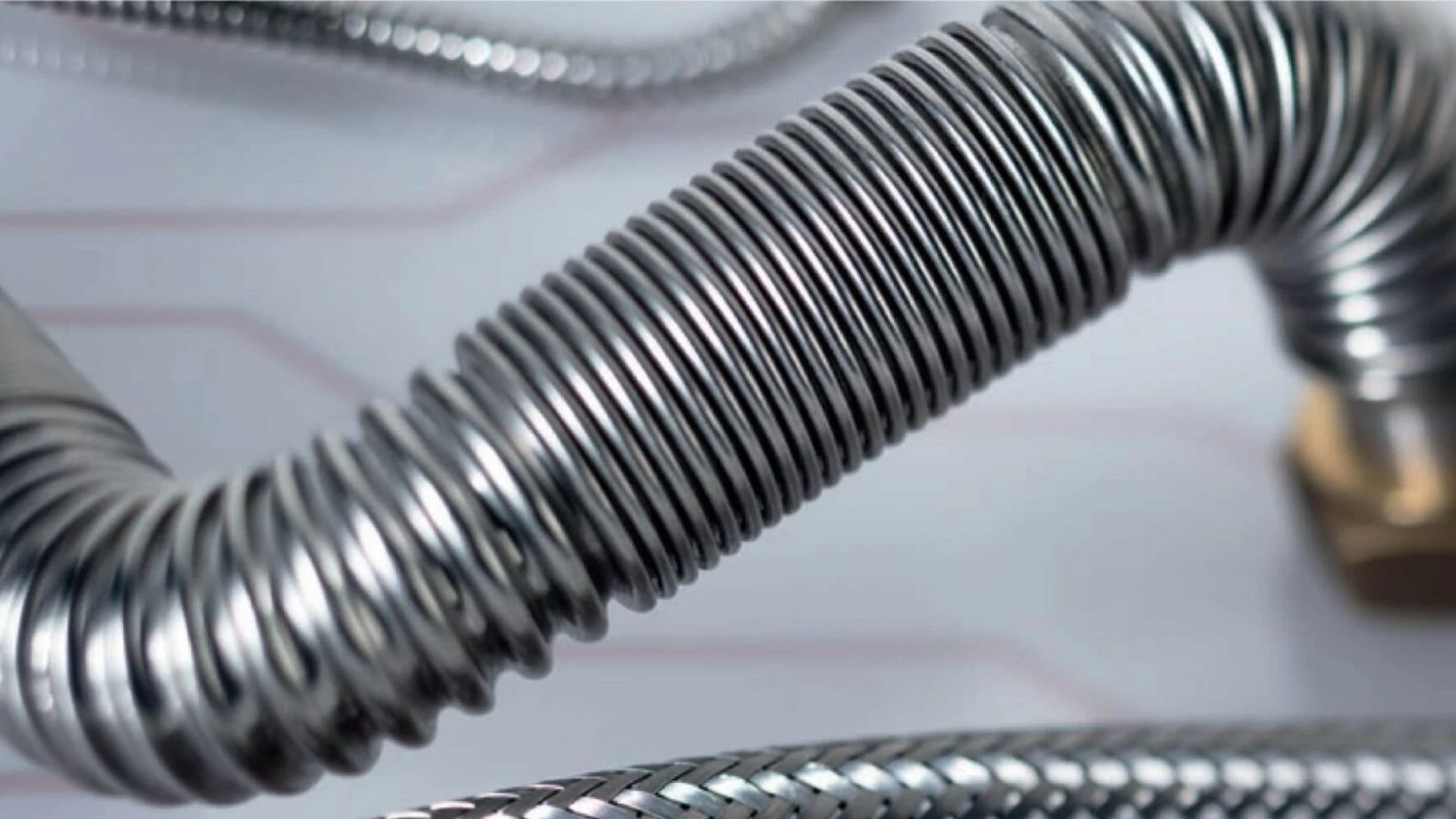
But the industry is changing. Air-source heat pumps, solar thermal systems, and installations in increasingly confined technical spaces present challenges that rigid copper cannot always address efficiently. Corrugated stainless steel tubing has gained ground precisely in these situations—not because it is better in every way, but because it better addresses certain specific problems.
This comparison outlines the most important technical criteria to help you make the right decision for each installation.
Three situations where switching to corrugated stainless steel has the greatest impact
Before getting into the full comparison, here are the three situations where the difference between materials is most evident on a construction site.
- Aerothermal energy and heat pumps. The pump’s continuous vibration causes the copper welds to fatigue over time. The corrugated stainless steel tubing absorbs that vibration due to its own geometry, without the need for additional components. This is the most common reason we hear from installers who have experienced leaks in heat pump connections.
- Solar thermal system using glycol. Propylene glycol used as a heat transfer fluid in solar systems can be corrosive to copper under repeated temperature cycles and at high concentrations. AISI 316L is highly resistant to glycol and compatible under normal solar installation conditions. This is the most common turning point for installers who have been working with copper in solar systems for years and begin to see problems after five or six years.
- Confined technical spaces. In small machine rooms, utility rooms, or renovation projects with difficult access, rigid copper tubing requires precise route planning, cutting to exact lengths, and soldering or crimping in awkward positions. Stainless steel corrugated tubing can be bent by hand on the spot, adapts to the actual space, and significantly reduces installation time for these types of jobs.
Technical Comparison: CATS Stainless Steel Corrugated Tubing vs. Copper
| Criterion | CATS Stainless Steel Corrugated Tube (AISI 316L) | Rigid copper tubing |
| Bent on site | By hand, without tools | Requires a calibrated bending machine |
| 90° Elbow | Manual, without additional accessories | Welded or press-fit elbow |
| Number of connections per installation | Minimum (the tube adjusts to the travel) | High (each change of direction requires a part) |
| Risk of leakage | Reduced (fewer joints, metal-to-metal seal) | Proportional to the number of welded or press-fitted joints |
| Resistance to mechanical vibration | High (the corrugation absorbs vibration) | Turn it off (vibration causes welds to fatigue) |
| Glycol resistance | High (AISI 316L compatible under normal conditions) | Limited (may degrade during intense cycles) |
| Thermal Expansion Management | The corrugation absorbs axial expansion | Requires expansion joints in long sections |
| Continuous operating temperature | Up to 200°C (solar version with PES insulation) | Up to ~180°C |
| Short-term temperature | Up to 650°C | Up to ~250°C |
| Working pressure | PN16 (DN8–DN25) / PN5 (DN32–DN50) | Varies depending on wall thickness |
| Heat Transfer in Heat Exchangers | The corrugated geometry promotes turbulent flow, which improves heat transfer compared to a straight tube | Laminar Flow in a Straight Pipe |
| Corrosion resistance | Very high (AISI 316L) | Moderate (susceptible in environments containing chlorides) |
| Weight | Slight | Larger than corrugated stainless steel of the same diameter |
| Installation Tools | CATS 250 pipe cutter + CATS 120 press or C-Klip system, adapters for Type 1 and Type 2 press-fit fitting machines. | Bending machine, torch, or press-fitting tool |
| Gas Certification | DVGW (Germany), UNE-EN 15266 | By manufacturer and part number |
| Recyclability | 100% | Sign Up |
Which Material to Use Depending on the Application
| Application | Recommendation | Main reason |
| Hot and cold water (domestic water supply) | Corrugated stainless steel (AISI 304 or 316L) | Preferably in chlorinated or harsh water |
| Aerothermal Energy and Heat Pumps | Corrugated stainless steel (AISI 316L) | Absorbs vibration and repeated thermal cycles |
| Solar thermal system with glycol | Corrugated stainless steel (AISI 316L) | Greater long-term resistance to glycol |
| Residential and Industrial Gas | Corrugated stainless steel (AISI 316L, WR16-CE) | Complies with UNE-EN 15266 and UNE 60670-3 |
| Heat exchangers | Corrugated stainless steel (AISI 316L) | Corrugation enhances heat transfer |
| Confined spaces and difficult access | Corrugated stainless steel | Hand-folding simplifies installation |
| Rehabilitation of existing facilities | Corrugated stainless steel | Compatible with existing copper, PEX, and multilayer pipes |
| Industrial and Medical Gases | Corrugated stainless steel (AISI 316L) | Requires specifically certified piping |
| Simple installations in a straight line | Copper or stainless steel—either is fine | No distinct technical advantage of corrugated cardboard |
When Copper Is Still Valid
Copper is a perfectly suitable material for straight-run water systems with few connections, no exposure to glycol, and no significant mechanical vibration. Under these conditions, the advantage of corrugated stainless steel is minimal, and the decision may come down to the cost of the material or the installer’s preference.
We do not recommend using copper in air-source heat pump systems, solar thermal systems using glycol, or in any installation where mechanical vibration is a factor. In these applications, field experience shows that corrugated stainless steel results in fewer problems over the long term.
So, corrugated stainless steel or copper?
The answer depends on the application, not on the material in the abstract. To summarize in practical terms:
Copper remains a viable option for simple, straight installations that are not exposed to glycol or mechanical vibration. Corrugated stainless steel is clearly the better choice for air-source heat pumps, solar thermal systems, installations subject to vibration, confined spaces, and any application where installation flexibility or the material’s chemical resistance are important factors.
If you have questions about what to specify for a particular installation, the technical team at AZ Broquetas can provide guidance before you get started.
Frequently Asked Questions
The price of the material varies depending on the market and the diameter. In many cases, the difference in material cost is offset by reduced installation time, fewer fittings, and fewer long-term problems. The total cost of installation—not just the cost of the material—is the correct basis for comparison.
Yes. The CATS system offers specific connectors for joining stainless steel corrugated tubing to copper tubing. This is a common solution in renovation projects where part of the existing system is made of copper and the user wants to expand or repair it using stainless steel corrugated tubing.
AISI 316L is compatible with drinking water, domestic hot water, propylene glycol, ethylene glycol, natural gas, LPG, and industrial gases under normal installation conditions. For medical gases or special fluids, refer to the technical data sheet and the specific certifications for each product.
We cannot verify a single figure that applies to all systems. What we can say, based on our experience in distribution, is that in air-source heat pump and solar thermal applications using glycol, corrugated stainless steel systems have significantly fewer long-term issues than their copper counterparts.
Luis Broquetas is the director of AZ Broquetas, the exclusive distributor in Spain for AZ Intec, a German manufacturer specializing in corrugated stainless steel tubing (CSST) systems for residential, commercial, and industrial installations. Certifications: DVGW, ISO 9001, ISO 14001.