The first question that comes to mind when an installer works with corrugated stainless steel tubing for the first time is always the same: How far can I bend it without compromising the cross-section?
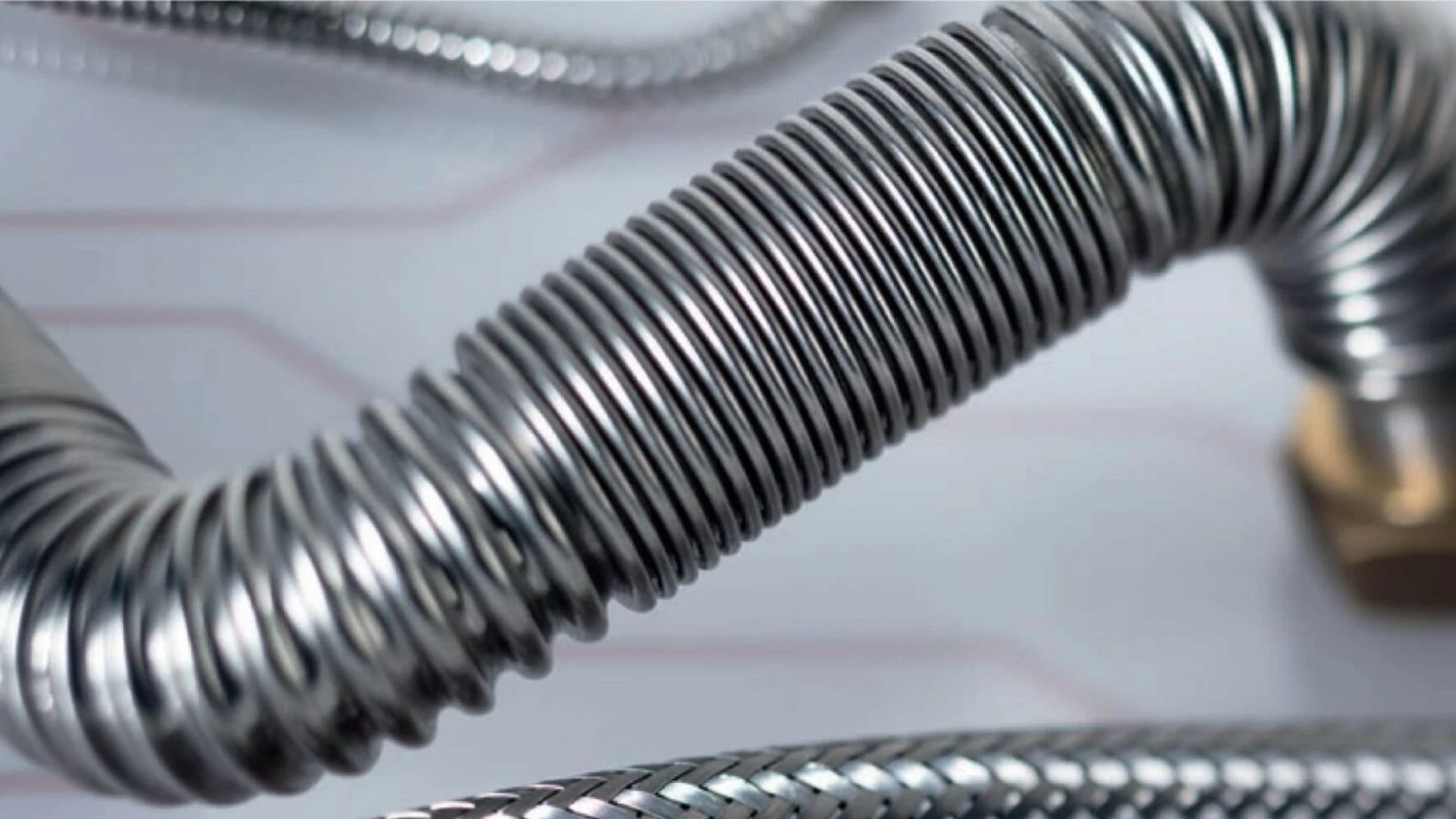
That’s the right question. The difference is that stainless steel corrugated tubing does not behave like copper. Its structure of parallel corrugations acts like a link chain: it distributes the bending stress along the entire curve without flattening the cross-section. This makes it possible to bend it by hand, without tools, right on the job site.
But that advantage has a specific technical limitation. This article explains what that limitation is, how to apply the correct technique, and what mistakes can render an installation invalid even if it looks well done.
The only technical parameter you need to memorize
Minimum bend radius for the CATS system: between 1.20 and 1.70 times the outer diameter of the pipe.
This value is certified by AZ Intec under the German DVGW certification. Above that limit, the pipe maintains its full cross-section and design flow rate under normal installation conditions. Below that limit, the corrugations on the inner surface collapse and the cross-section is reduced.
The relevant measurement for the calculation is the actual outer diameter, not the nominal DN. Approximate values for the most common diameters:
| Nominal diameter | Approx. outer diameter | Minimum radius (x1.20) | Minimum radius (x1.70) |
| DN12 | 15.9 mm | 19 mm | 27 mm |
| DN15 | 18.9 mm | 23 mm | 32 mm |
| DN20 | 23.2 mm | 28 mm | 39 mm |
| DN25 | 29.0 mm | 35 mm | 49 mm |
Approximate values. Refer to the technical data sheet for each part number for the exact outer diameter.
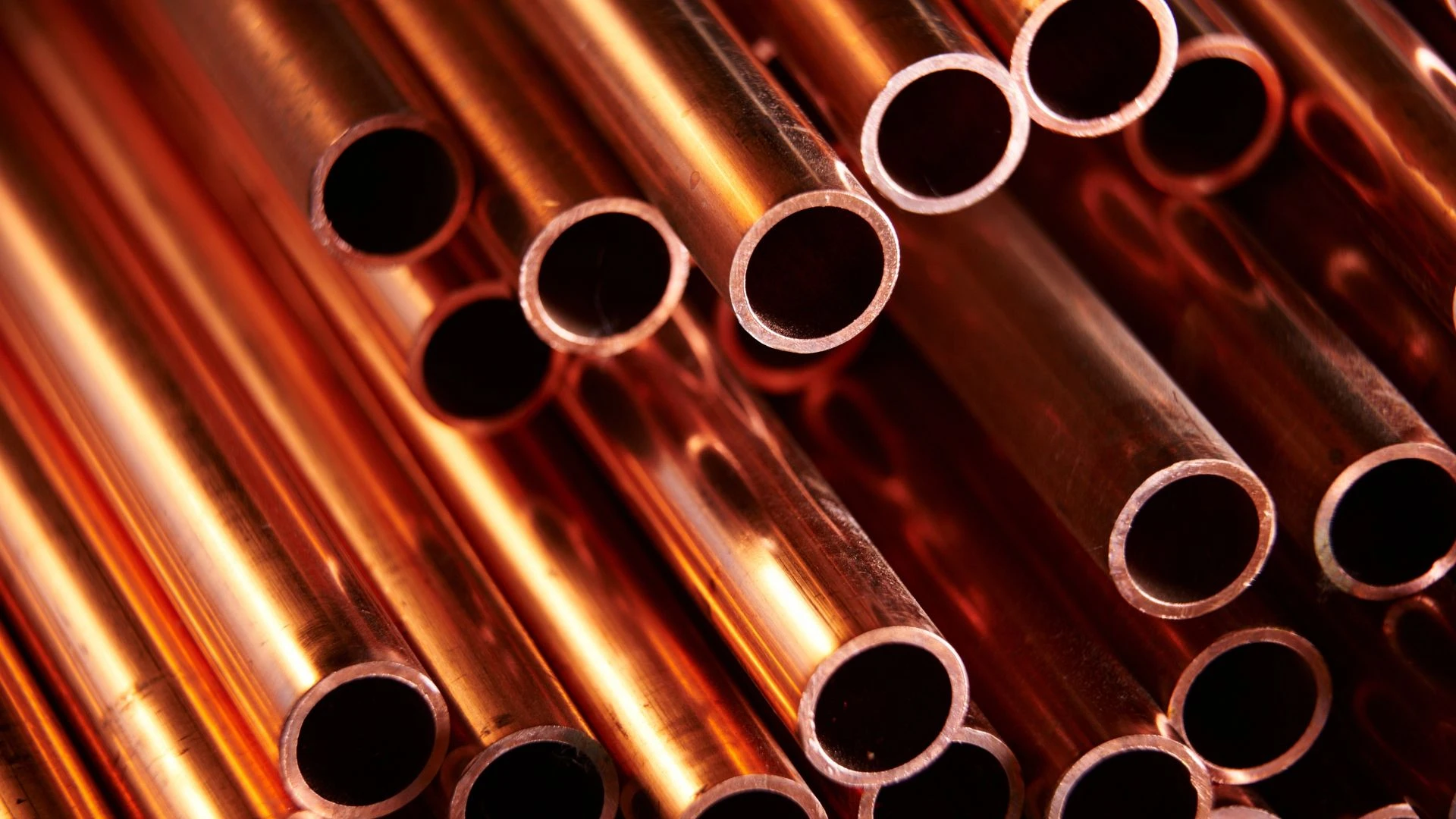
Stainless Steel Corrugated Pipe vs. Copper: What Changes on the Job Site
| CATS Stainless Steel Corrugated Tube (AISI 316L) | Rigid copper tubing | |
| Folded | By hand, without tools, for diameters ranging from Dn8 to Dn25 | Requires a calibrated bending machine |
| 90° Elbow | Manual, without additional accessories | Welded or press-fit elbow |
| Number of joints | Minimum | High (each change of direction requires a part) |
| Risk of leakage | Reduced (fewer joints) | Proportional to the number of joints |
| Vibration Resistance | High (the corrugation absorbs vibration) | Turn it off (vibration causes welds to fatigue) |
| Glycol resistance | Stainless Steel (AISI 316L) | Long-term limited |
| Continuous maximum temperature | 200°C (solar version with PES insulation) | ~180°C |
| Working pressure | PN16 (DN8–DN25) | Varies depending on thickness |
| Tools Needed | CATS 250 Pipe Cutter + CATS 120 Press or C-Klip | Bending machine, torch, or press fitting |
Four-Step Folding Technique
Step 1. Measure before cutting. Calculate the total length before cutting the tubing. The CATS system is supplied in rolls of 4, 10, 20, and 60 meters and is cut using the CATS 250 tubing cutter. An incorrect measurement will require you to redo that section.
Step 2. Position your hands correctly. Place your hands on either side of the bend. The distance between them should be proportional to the diameter: 8–10 cm for DN8–DN12, and 12–15 cm for DN15–DN20–DN25. A greater distance between your hands distributes the stress more evenly.
Step 3. Apply force gradually. Bending is done in a single plane, without axial torsion. Apply force gradually, gently rotating your wrists to the desired angle. If you feel sudden resistance or hear a crack, stop: you are working close to the minimum radius, or an accessory is too close.
Step 4. Visually inspect the section. After the curve, check the point of maximum curvature. The ripples on the outer surface should be slightly spaced apart, and those on the inner surface should be slightly compressed, but not collapsed. If any ripples have collapsed or the section has lost its circular shape, the curve is too tight and that section must be redone.
The CATS system allows you to create 90° elbows without additional fittings, eliminating connection points and reducing the risk of leaks.
Five Mistakes That Technically Invalidate an Installation
These are the mistakes that most often cause problems later on, even when the installation seems correct upon completion:
1. Collapsed corrugation on the inner surface. If one or more corrugations have completely collapsed, the section is compromised. The curve must be rebuilt. It cannot be salvaged.
2. A bend made too close to a fitting. The bending area must begin at least two diameters away from the end of the fitting. Bending any closer transfers stress to the fitting and may compromise the leak-tightness of the joint.
3. Partial crushing of the section. If the cross-section at the point of maximum curvature has lost its circular shape, there is a flow restriction. It must be cut and redone.
4. Axial torsion occurring simultaneously with bending. If torsional force is also applied to the tube’s axis during bending, the corrugations may behave unpredictably and could be damaged. Bending must always be performed in a single plane.
5. Vibration without a compensator when connected directly to the pump. The CATS pipe connected directly to a heat pump without any vibration-damping element may experience fatigue in the section closest to the machine. The solution is to insert a WS-CE flexible hose between the pump and the corrugated pipe.
Technical Specifications of the CATS System
| Parameter | Value |
| Drinking Water Materials | AISI 304 and AISI 316L |
| Gas, Solar, and Industrial Equipment | AISI 316L |
| Working Pressure DN8–DN25 | PN 16 (16 bar) |
| Working Pressure DN32–DN50 | PN 5 (5 bar) |
| Minimum radius of curvature | 1.20 to 1.70 times the outer diameter |
| Continuous Temperature (PES Solar Version) | Up to 200°C |
| Certification | DVGW (Germany) |
| Gas Regulations in Spain | UNE-EN 15266, UNE 60670-3 |
| Compatible gas families | 1st (city), 2nd (natural gas/methane), 3rd (LPG) |
| Standard Lengths | Rolls of 4, 10, 20, and 60 m |
Frequently Asked Questions
It is bent by hand, without a bender. The parallel corrugation structure of the CATS system allows the pipe to be bent directly on site. Copper benders should not be used because they can damage the corrugations without causing any visible damage on the outside.
Between 1.20 and 1.70 times the outer diameter of the pipe. Below that limit, the cross-section may become constricted, reducing the flow rate.
Yes. The CATS system allows you to create 90° elbows manually without the need for additional elbows or fittings, reducing the number of connection points and the risk of leaks.
There is no set limit. There must be at least 10 cm of straight section between two consecutive curves to distribute the stress properly.
No, as long as the minimum radius has been maintained. AISI 316L has no plastic memory within its normal operating range. The service life is the same throughout the entire system.
The CATS 250 pipe cutter is designed with four wheels for greater stability. Generic cutters can deform the end of the pipe.
Luis Broquetas is the director of AZ Broquetas, the exclusive distributor in Spain for AZ Intec, a German manufacturer specializing in corrugated stainless steel tubing (CSST) systems for residential, commercial, and industrial installations. Certifications: DVGW, ISO 9001, ISO 14001. Applicable standards: UNE-EN 15266, UNE 60670-3.