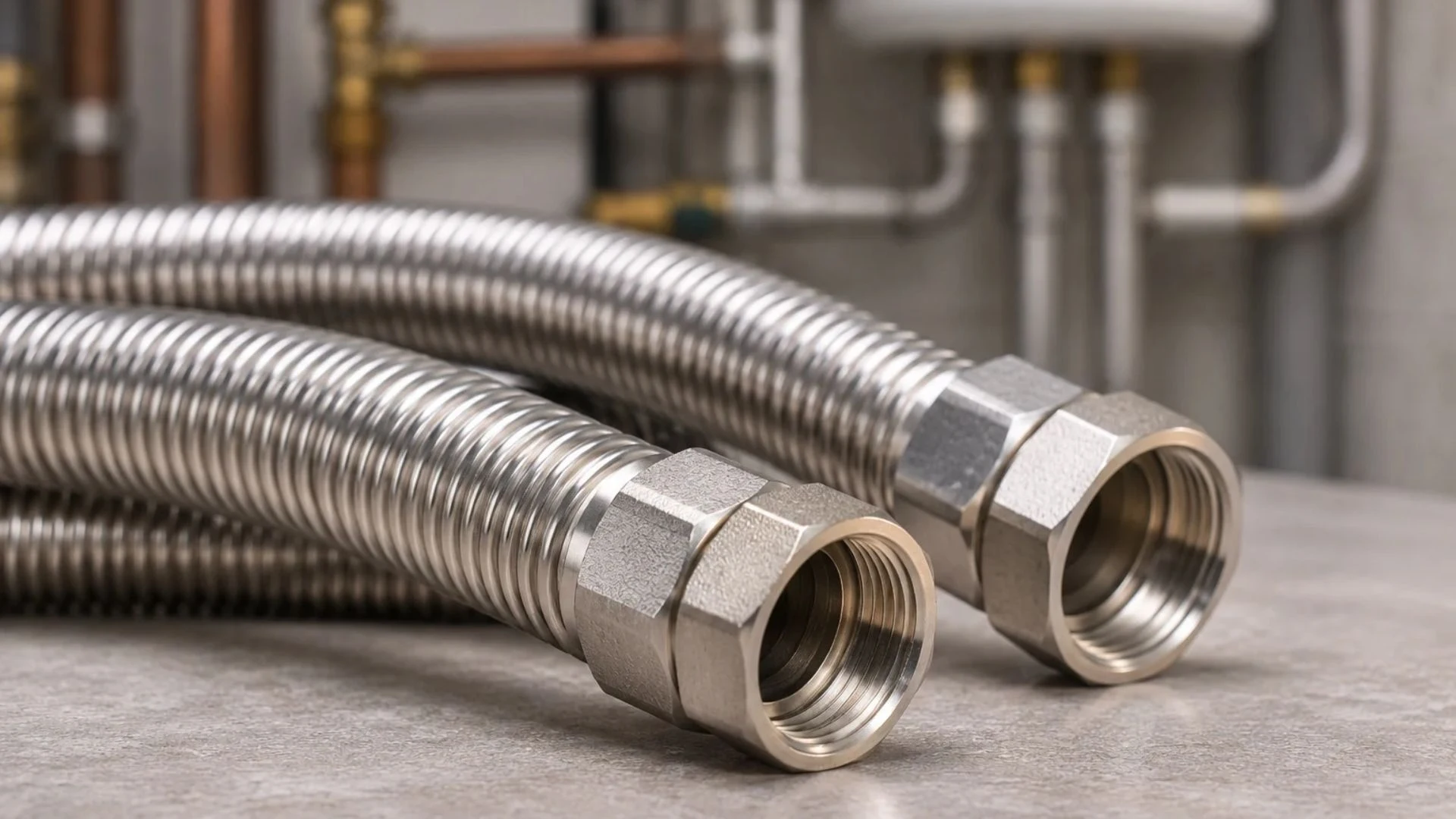
In an indoor cold drinking water system, with water of standard composition and a certified reference, AISI 304 is usually sufficient. AISI 316L provides additional safety margins when chloride levels, temperature, or outdoor exposure to salts increase, and when specified by product documentation or project engineering.
In domestic hot water systems, temperature affects the analysis. A system operating at temperatures above 50–60 °C should not be evaluated using the same guideline ranges as a cold-water system. Chlorides, oxidizing agents, stagnation, crevices, stresses, and heat treatments must all be considered together.
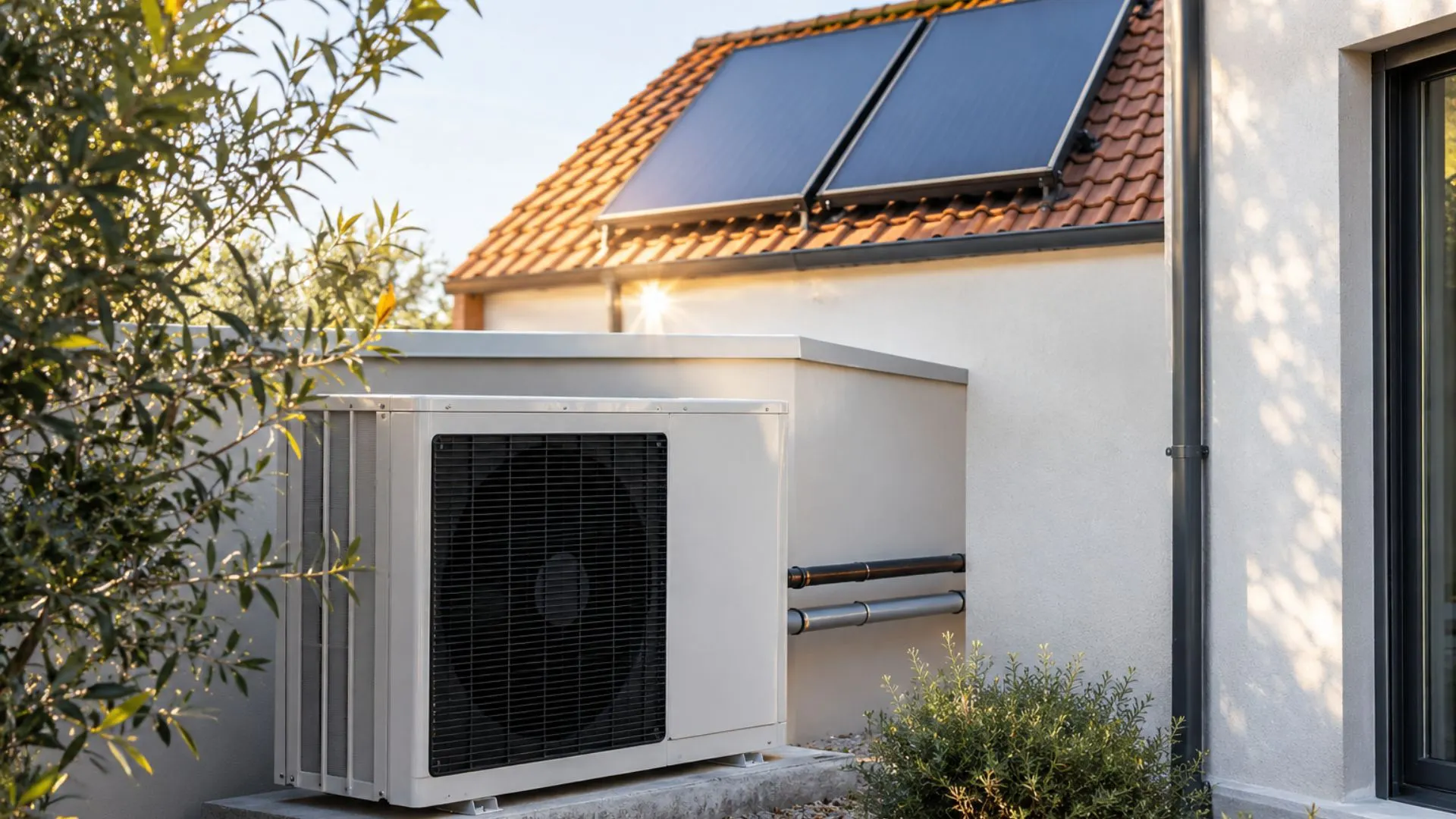
Neither air-source heat pumps nor glycol alone determine the rating. In these applications, the composition and maintenance of the fluid, the environment, the temperature, the connections, and the limits of the entire system must be checked.
Quick Answer: Initial Guidance for the Installer
| Status | Initial Orientation | Conditions to Check |
| Indoor cold drinking water | A certified AISI 304 reference is usually sufficient. | Water composition, ambient temperature, circulation, and absence of salt exposure. |
| DHW | Do not extrapolate the cold water ranges; 316L may provide a safety margin. | Normal and maximum temperatures, chlorides, oxidizing agents, stagnation, stresses, and heat treatments. |
| High chloride levels or external salts | AISI 316L provides a greater margin, within its limits. | Chlorides, temperature, oxidizing agents, deposits, crevices, cleaning, and finish. |
| Air-source heat pump or glycol | AISI 304 may be sufficient under controlled conditions; 316L provides a safety margin if conditions become more severe. | Fluid specifications, mixed water, temperature, maintenance, and outdoor exposure. |
| Welded joints | Specify 304L or 316L depending on the environment and ensure proper execution. | Procedure, root protection, contamination, and cleaning of the thermal dye. |
| Seawater | Do not generically specify AISI 304 or AISI 316L. | Specific selection of alloy, design, slots, tanks, circulation, and temperature. |
The table provides initial guidance. When the water, environment, or process is close to the material’s limits, the documentation for the specific application and the designer’s judgment should take precedence.
What Really Sets AISI 304 Apart from AISI 316L
Both are austenitic stainless steels. Their corrosion resistance is based on a passive layer rich in chromium oxide that forms on the surface.
AISI 316L contains molybdenum; AISI 304 does not intentionally include it as an alloying element. Molybdenum improves resistance to pitting and crevice corrosion in many chloride-containing environments.
Actual performance does not depend solely on the grade. Temperature, oxidizing agents, surface finish, welds, stagnation, deposits, stresses, and geometry can reduce the available margin.
Reference Chemical Composition
The following composition corresponds to the European designations 1.4301 and 1.4404 according to EN 10088. For a specific product, consult the material certificate.
| Item | 1.4301 / AISI 304 | 1.4404 / AISI 316L |
| Chromium (Cr) | 17.0–19.5% | 16.5–18.5% |
| Nickel (Ni) | 8.0–10.5% | 10.0–13.0 % |
| Molybdenum (Mo) | Not added on purpose | 2.0–2.5% |
| Carbon (C), maximum | 0.07% | 0.030% |
| Manganese (Mn), maximum | 2.0% | 2.0% |
| Nitrogen (N), maximum | 0.11% | 0.11% |
Nitrogen is included because it is part of the PREN formula. The ranges may change if a different standard or designation is used.
The PREN: A Comparative Index, Not a Percentage of Resistance
The PREN—Pitting Resistance Equivalent Number—allows for a comparison of relative pitting resistance based on chemical composition. A common formula is:
PREN = %Cr + 3.3 × %Mo + 16 × %N
In terms of nominal compositions, AISI 304 typically ranges from 18 to 20, and AISI 316L from 24 to 26. A higher PREN does not mean that the material will last a specific percentage longer, nor doesit define a universal maximum chloride concentration.
CPT and CCT: Temperature Is Also a Factor
The critical pitting temperature (CPT) and the critical crevice corrosion temperature (CCT) allow for the comparison of alloys through accelerated testing. ASTM G48 specifies methods for determining CPT and CCT in a standardized ferric chloride solution; ASTM G150 determines CPT electrochemically.
These values are intended to classify materials and evaluate products, not to directly translate a laboratory temperature to a facility. ASTM warns that test conditions accelerate corrosion and do not simulate a real-world service environment. The concept does, however, offer a practical conclusion: two types of water with the same chloride content can pose different risks when operating at different temperatures.
What does the “L” in 316L stand for?
The “L” denotes a low-carbon variant. In 316L, the carbon content is limited to a maximum of 0.030%. This reduces the risk of sensitization in the heat-affected zones during welding.
In a welded assembly, the comparison should not always be between 304 and 316L. There is also 304L. The selection must take into account the alloy grade, the low-carbon variant, the welding procedure, root protection, and post-weld cleaning.
Differences That Are Comparable
| Feature | AISI 304 | AISI 316L |
| Molybdenum | Not added on purpose | 2.0–2.5% according to EN 10088 for 1.4404 |
| PREN (for guidance) | Approximately 18–20 | Approximately 24–26 |
| Chloride pitting and crevice corrosion | Lower relative strength | Higher relative resistance, but not immune |
| Carbon steel and welding | Consider 304L if welding is required | Low carbon reduces the risk of sensitization |
Chlorides, chlorination, and hardness: three distinct concepts
Chlorides are ions present in water. They can originate from the water source, saltwater intrusion, industrial processes, or contamination. Their effect depends primarily on concentration and temperature, but also on crevices, deposits, stagnant water, and welds.
Chlorination is a disinfection process that uses oxidizing agents. Residual free chlorine and chloride ion concentration are different parameters. Both can influence corrosion, but they must be measured separately.
Hardness primarily reflects the calcium and magnesium content. It can promote scaling, but it alone is not sufficient to determine whether to use AISI 304 or AISI 316L.
Quantitative guidelines for natural water at room temperature
The Nickel Institute’s *Stainless Steel Plumbing* guide states, as a reference based on experience with circulating natural water at room temperature, that pitting and crevice corrosion in 304 stainless steel are rare up to approximately 200 ppm of chlorides, and in 316 until approximately 1,000 ppm.
These values are for guidance only; they are not design limits. They should not be applied without adjustment to hot water, domestic hot water (DHW), stagnant sections, surfaces with deposits, cracks, uncleaned welds, or systems with high levels of oxidizing agents.
• Below these ranges, there is no automatic guarantee against corrosion.
• Above these ranges, the material cannot be selected without evaluating the overall conditions.
• The manufacturer’s technical data sheet, certification, and limitations take precedence over a generic figure.
• For potable water, the sanitary compliance of the entire product must be verified.
Cold water and DHW are not the same scenario
In indoor cold water systems, the temperature typically provides greater protection against localized corrosion and chloride-induced cracking. In DHW systems, the material typically operates at higher temperatures and may be subject to periods of stagnation, scaling, and heat treatment.
Royal Decree 487/2022 establishes minimum temperatures of 60 °C in storage tanks for certain DHW systems and allows temperatures of up to 70 °C during heat treatment. These temperatures do not cause corrosion on their own, but they require closer monitoring of chlorides, oxidizing agents, stresses, joints, and surface conditions.
The guideline range for chlorides published for natural water circulating at room temperatureshould not be extrapolated to DHW. System documentation, water analysis, and actual temperatures should guide the selection.
Chloride Stress Corrosion Cracking: The Limit That Molybdenum Does Not Eliminate
Chloride stress corrosion cracking (CSCC) requires the combined presence of a chloride-containing environment, tensile stresses, and favorable thermal conditions. These stresses may result from service, forming, or welding.
In approximately neutral solutions and under conditions of complete immersion, this mechanism is rare below about 50 °C. This is not a universal threshold: when chlorides become concentrated due to evaporation or wetting and drying cycles, it can occur at lower temperatures.
The molybdenum in 316L improves relative resistance to pitting and crevice corrosion, but does not eliminate the susceptibility of austenitic stainless steels to chloride-induced cracking. If the risk is significant, design changes, moisture barriers, stress reduction, or more resistant grades may be necessary.
Corrosion Under Insulation: Why Moisture Matters
In damp insulation, water can leach soluble salts from the insulation itself or from the surrounding environment and carry them to the metal surface. Thermal cycles concentrate these salts as the water evaporates. If tensile stresses are also present, this creates conditions conducive to chloride-induced cracking.
The inspection should focus on cladding joints, penetrations, low points, supports, and areas where water can enter or accumulate. The exterior barrier, sealing, and drainage capabilities are all part of the prevention strategy.
UNE-EN ISO 12624:2023 establishes the method for determining traces of water-soluble chlorides, fluorides, silicates, and sodium, as well as pH, in thermal insulation products. This is a test method; it does not, on its own, establish a universal acceptance limit for each installation.
In isolated solar or thermal systems, a maximum operating temperature of the system alone does not prove that a risk exists. Moisture, soluble salts, stresses, and an unfavorable surface temperature must all be present.
Seawater and Coastal Environments
Seawater contains a much higher concentration of chlorides than a drinking water system. AISI 316L can be susceptible to pitting and crevice corrosion, especially in the presence of deposits or stagnant water. It should not be prescribed as a universal solution for seawater piping.
A coastal environment is different. Salt aerosols can settle on exterior surfaces and become concentrated during cycles of wetting and drying. 316L offers greater resistance than 304, but the decision depends on exposure, temperature, insulation, cleanliness, and crevices.
When AISI 304 Is Usually Sufficient
A certified AISI 304 specification is generally reasonable for indoor cold drinking water systems when water analysis and temperature are consistent with the documentation, the installation is protected from external salts, and joints are made according to the system’s instructions.
It can also be used in closed-loop systems and other applications when the manufacturer confirms compatibility with the fluid and operating conditions.
When Does AISI 316L Provide Additional Margin?
AISI 316L can provide a margin of safety against localized corrosion when chloride levels rise within a compatible range, there is external exposure to salts, temperatures rise, or the technical specification requires 316L.
That margin does not guarantee immunity to pitting, crevice corrosion, or chloride-induced cracking. If conditions exceed its capacity, higher-alloy grades, duplex steels, or other materials may be required.
Geothermal Heating and Glycol: The Application Does Not Determine the Steel Grade
In a closed indoor aerothermal circuit with controlled fluid and a certified reference, 304 may be sufficient. 316L provides a safety margin when chlorides are present, there is outdoor exposure to salts, temperatures are more demanding, or a specific requirement is stipulated.
A properly formulated and inhibited glycol does not automatically require the use of 316L. The fluid data sheet, the mixing water, the temperature, and the system documentation should be consulted. Maintenance is covered in “Piping for Aerothermal and Solar Thermal Systems: Operating Conditions and Selection Criteria.”
Welding and Finishing: The Material Cannot Compensate for Poor Workmanship
To maintain corrosion resistance, the welding procedure, root protection, filler material, carbon steel contamination, and cleaning of the heat-affected zone must be controlled.
A poorly protected welded area can become the weakest point even with AISI 316L. In welded installations, it is advisable to specify low-carbon grades—304L or 316L—and a procedure compatible with the service.
Sanitary compliance for drinking water
Article 44 of Royal Decree 3/2023 requires that materials and products that come into contact with drinking water must not impair its quality or transfer harmful substances, germs, or properties. Operators and construction companies must verify in advance that the products meet the applicable requirements.
Annex IX establishes criteria for metallic materials, including the use of permitted compositions and the corresponding tests. Therefore, simply specifying “AISI 304” or “AISI 316L” is not sufficient: the entire product—including pipes, fittings, gaskets, and other components in contact with water— must be verified for compliance.
How the CATS system applies these criteria
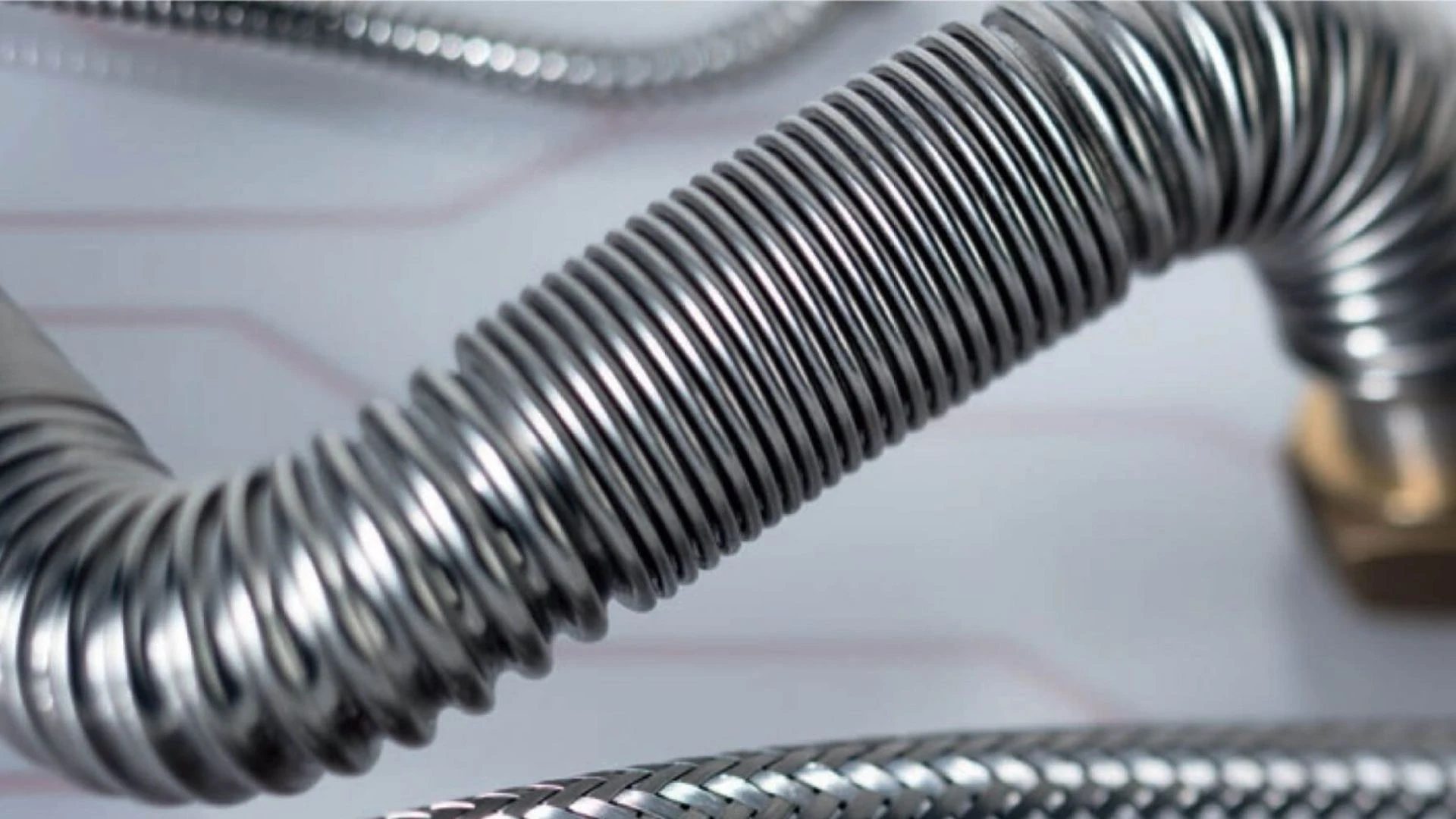
AZ Broquetas publishes CATS configurations in AISI 304 and AISI 316L based on the part number and application. Publicly available information specifies AISI 316L for gas and AISI 304 or AISI 316L for certain drinking water applications.
Before specifying a model, the following must be verified: the approved fluid, diameter, pressure, temperature, fittings, gaskets, certification, operating environment, and installation instructions.
The updated data can be found at Features of the CATS System Stainless Steel Corrugated Tube. To compare corrugated tubing with a rigid solution, see “Stainless Steel Corrugated Tubing vs. Copper: Technical Differences and Selection Criteria.”
Checklist Before Selecting 304 or 316L
• Exact material designation and standard.
• Certification of the grade for the fluid and application.
• Distinction between cold water, hot water, and heat treatment applications.
• Chlorides, oxidizing agents, pH, and maximum temperature.
• Stresses, welds, stagnation, deposits, and crevices.
• Indoor, outdoor, coastal, or industrial exposure.
• Risk of water ingress under insulation.
• Soluble salt content and pH of the insulation, when applicable.
• Compatibility of fittings, gaskets, and other components.
• Equipment and system manufacturer’s limits.
Frequently Asked Questions
Is AISI 304 suitable for drinking water?
Yes, provided that the grade is certified for drinking water and that the water analysis, temperature, and design are compatible with its limits. In indoor cold-water systems with standard water composition, adequate circulation, and no external exposure to salts, 304 is usually sufficient. This conclusion should not be automatically applied to hot water systems (DHW): higher temperatures, heat treatments, stagnation, and scale buildup reduce the safety margin and require a comprehensive review of all conditions.
When should AISI 316L be chosen?
It should be considered when greater resistance to pitting and chloride-induced crevice corrosion is needed, when there is outdoor exposure to salts, when temperatures rise, or when required by the system specifications. Its molybdenum content improves its resistance relative to 304, but it does not make it immune to chloride-induced cracking or eliminate it. The decision must remain within documented limits and also take into account welding, stresses, deposits, insulation, and maintenance.
Is AISI 316L suitable for transporting seawater?
It should not be considered universally suitable. Seawater contains far more chlorides than a drinking water system, and 316L can be susceptible to pitting and crevice corrosion, especially in the presence of deposits, stagnant water, or geometrically confined areas. A seawater piping system requires specific selection of the alloy, design, joints, flow regime, and temperature. Under certain conditions, higher-alloy stainless steels, duplex steels, or other materials may be necessary.
Is AISI 316L mandatory in aerothermal systems?
There is no general requirement based on the application’s name. An internal, closed-loop system with controlled fluid and a certified reference may be compatible with AISI 304. AISI 316L provides a safety margin when chlorides are present, there is outdoor exposure to salts, temperatures are more severe, or the manufacturer specifies it. The glycol, mixing water, joints, insulation, and scheduled maintenance throughout the system’s service life should also be reviewed.
Does glycol require AISI 316L?
Not automatically. A new glycol, properly formulated and inhibited, may be compatible with various materials. The selection depends on the commercial product, its concentration, the inhibitors, the water used for mixing or topping off, the temperature, oxygen, and maintenance. Consult the fluid and system data sheets. A change in pH, fluid degradation, or the introduction of contaminants can alter the initially expected compatibility.
What is chloride-induced stress corrosion cracking?
This type of cracking occurs when chlorides, tensile stresses, and favorable thermal conditions coincide. In fully immersed and approximately neutral environments, it is rare below about 50 °C, but salt concentration due to evaporation or poor insulation can allow it to occur at lower temperatures. Both 304 and 316L are susceptible. The molybdenum in 316L improves resistance to other localized corrosion mechanisms, but it does not eliminate this risk.
Does a PREN of 25 mean 25% greater resistance?
No. The PREN is an index calculated based on chromium, molybdenum, and nitrogen that allows for a comparison of the relative pitting resistance among alloys. It does not express a percentage of durability, safety, or service life. Nor does it account for temperature, pH, oxidizing agents, cracks, deposits, welds, or stresses. To complete the comparison, CPT and CCT tests may be used; however, their results are also laboratory values and not direct service limits.
What should the installer ask for before making a choice?
You must have the water analysis or the complete fluid data sheet, normal and maximum temperatures, environmental conditions, type of joint, insulation, maintenance, and certifications for the specific model. For drinking water, you must verify that the entire product complies with Royal Decree 3/2023. For hot water systems, you must consider the required temperatures and heat treatments. Without this information, choosing between 304 and 316L is a matter of preference, not a documented technical decision.